
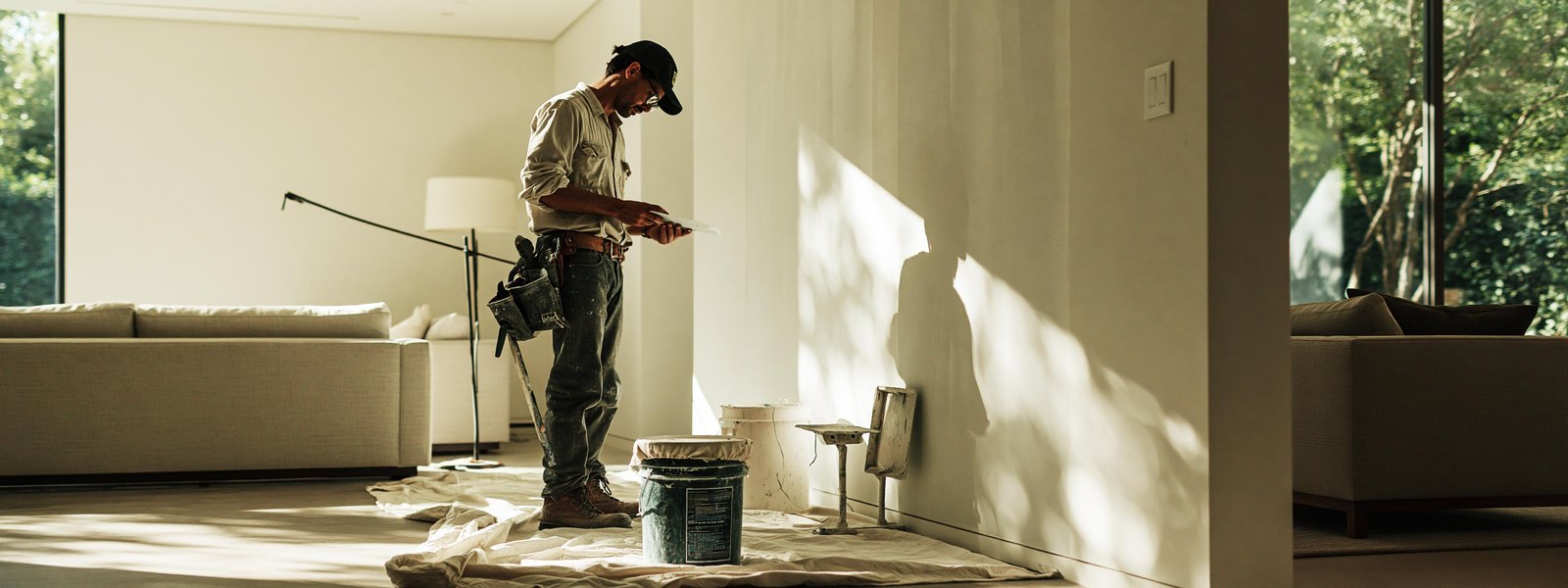
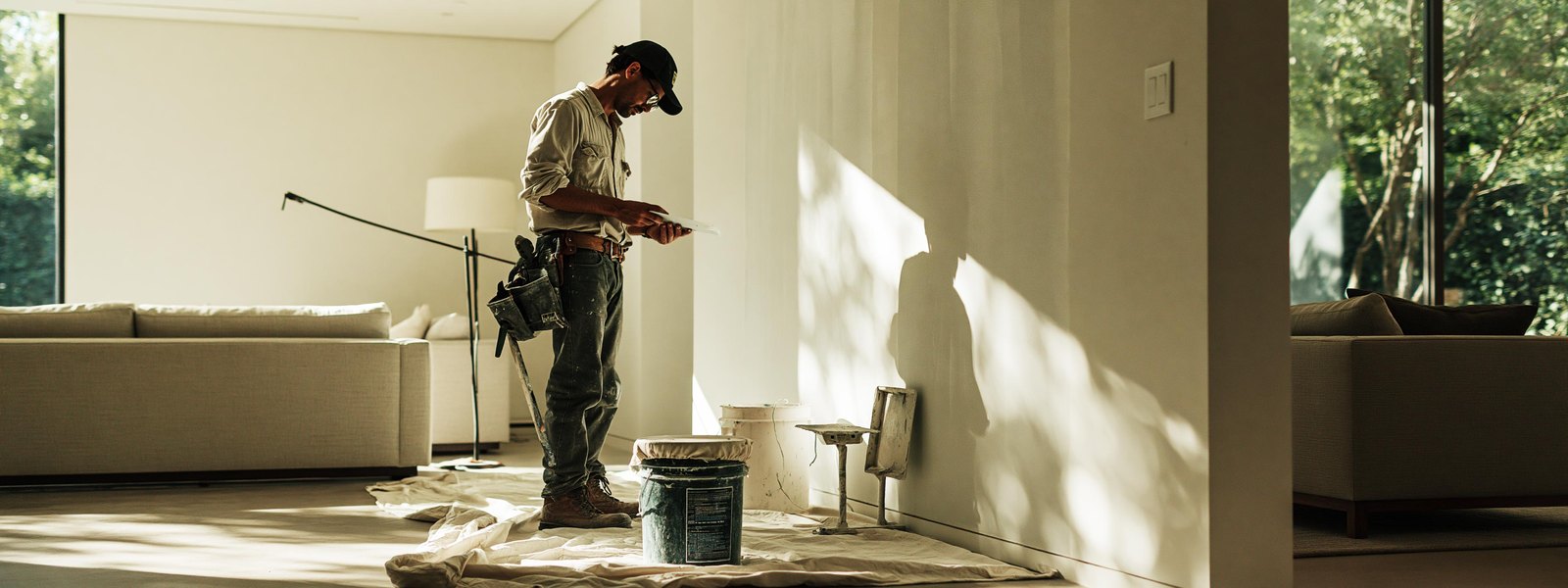
Drywall contractor in a work shirt and tool belt standing back in a furnished living room with one hand on an armchair, reading the long knockdown textured wall beside him, a lidded bucket and a mud pan standing on a canvas drop cloth at the foot of it

Drywall Repair in San Antonio, TX for Cracks, Holes and Water Damage

Most of the time it's one section of wall, not the whole room. We'll find out what caused the damage, then match your texture so the repair blends in.

Drywall contractor in a work shirt and tool belt standing back in a furnished living room with one hand on an armchair, reading the long knockdown textured wall beside him, a lidded bucket and a mud pan standing on a canvas drop cloth at the foot of it

How to Tell What Your Drywall Crack Means

Most drywall cracks are one of two things, and they're easier to tell apart than you'd think. Some have stopped moving. Those get cut back, taped and textured, and you never think about them again. Others are still working, and closing one before the cause is settled brings the same line back next spring. San Antonio Expert Drywall reads the wall first, so you know which one you have.

Most of Bexar County sits on clay that swells when it's wet and shrinks when it's dry. Your house sits on a slab poured right onto that ground, with no basement in between, so the movement goes up into the framing. The wall gives at its weakest spot, and nine times out of ten that's the top corner of a doorway. It's common all over San Antonio, and it usually doesn't mean anything is wrong with your house.

Some walls are ready to repair today. Others do better with one more wet season behind them, and we'll tell you honestly which yours is. Either way, we start every drywall repair in San Antonio by reading the wall.
What We Look For in a Drywall Crack

You can read most of a drywall crack yourself: which way it runs, how wide it is, where it starts and stops. We look at two things you can't see from the hallway: what's behind that wall, and whether your doors still latch.

What the direction and width of a drywall crack tell you

A hairline running straight up from the top corner of a door frame is the one we see most, and usually the least serious. The doorway is the weak point in the sheet, so the board tears there first when your door frame flexes. If that's what you have, you're in good shape.

A crack running on a diagonal is a different story. Diagonals follow the movement, so your wall is being pushed out of square rather than simply flexing.

Width tells us more than length. A hairline that holds one width end to end was left by movement that has already finished. One wide enough at one end to catch a fingernail is still working, and the wide end points toward the corner of your house that's moving.

When a drywall crack is really a foundation or plumbing problem

Sometimes the first call isn't a drywall call, and we'd rather tell you that on the first visit than sell you a repair that won't hold. A crack running through the ceiling and down the far side of the wall is one of those. So are doors that stop latching in three rooms at once, and a foundation repair company is who you want out first.

A brown ring overhead is a roof or a plumbing question first. Under a bathroom it's usually a supply line or a shower pan, and under an attic run it's often the air conditioner's condensate line. We'll tell you which one to call, and finish the drywall once the roofer or the plumber has fixed the leak.

What We Check Before We Price Your Drywall Repair

How much of the wall has actually failed, usually less than you'd expect
Whether the board behind your paint is still sound or has gone soft
Which texture is on that wall, orange peel or knockdown, and how far it blends out
What's behind the wall at that point: a stud bay, a water line, a duct or wiring
Whether anything is still wet, and where the water is getting in
Whether the crack has stopped moving, or is still working with the seasons

When We Repair a Section of Drywall and When We Replace It

The question we hear most on a bigger job is whether your whole sheet has to come out. Usually it doesn't. Drywall is finished in continuous coats across the joints, so every new sheet brings new seams to tape and hide, and each seam is a place a repair can show later.

So we cut out the failed section and build back to sound board. On a wall that's been hit, that's often a rectangle a foot or two across. Most homeowners are relieved when they hear how little of the wall has to come out.

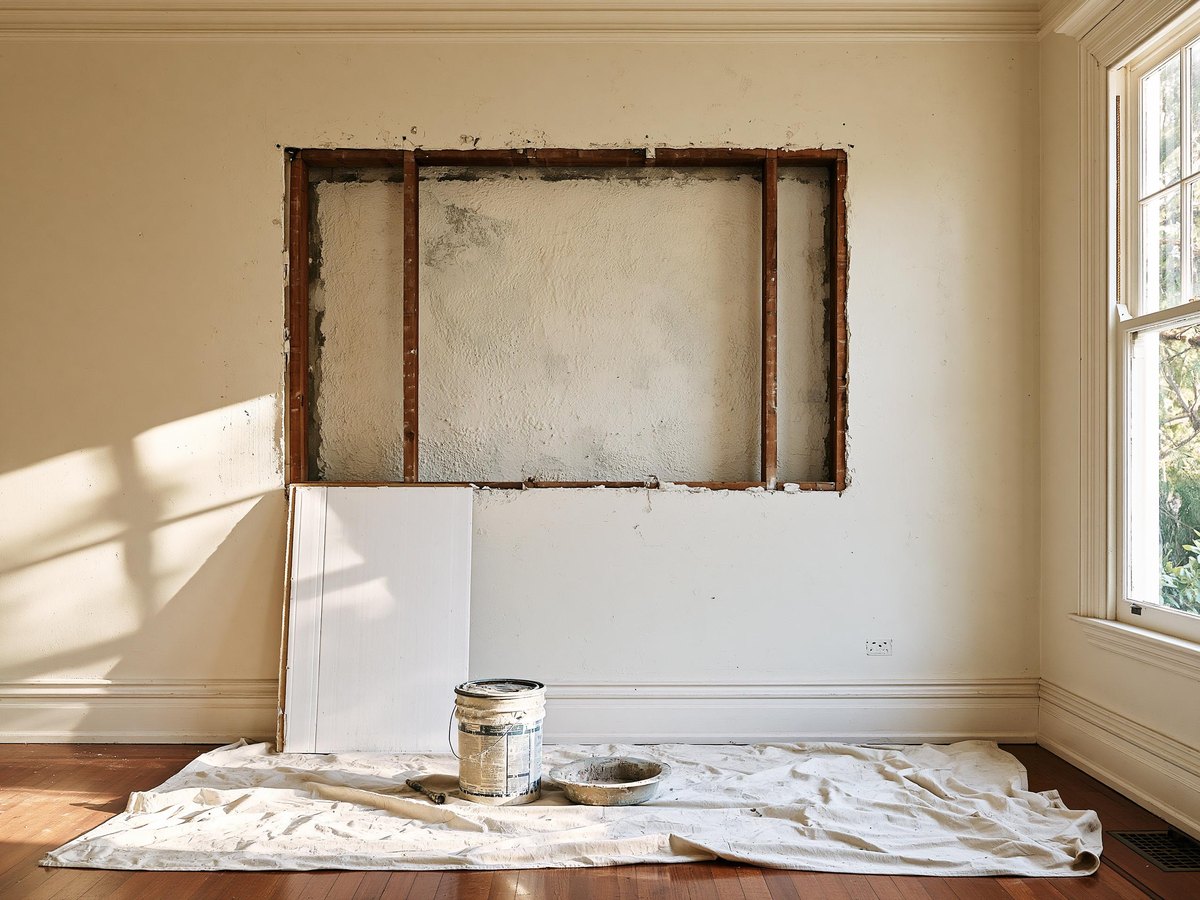
Section of a knockdown textured living room wall cut open in a clean straight rectangle back to two clean studs, the cavity behind clean and dry, the removed piece of board standing against the baseboard, a lidded bucket and a mud pan on a canvas drop cloth below

Does the whole sheet of drywall have to come out?

Sometimes a new sheet is the better job, and you'll hear us say so. Board that's been soaked and dried out is the clearest case, because gypsum that has lost its core crumbles under a screw. Damage in three or four spots along one run is the other, since a new sheet goes in quicker and finishes flatter.

Whole rooms happen too. After a leak or a remodel, your room usually comes back better as one job than as five.

Repairing drywall after a leak

A ceiling stain usually turns up after a long wet stretch, or after your air conditioner has run hard for a week. Drywall is last in the chain and first to show it, so the stain is nearly always smaller than the damage behind it.

We open the area up, follow how far the water traveled through the board and the insulation, and take out everything soft. The cavity then gets time to dry, because sealing up a wet one is how a ceiling ends up done twice. If the leak is still live, the roofer or the plumber puts it right first.

What Decides the Price of Your Drywall Repair

Two repairs that look identical from your hallway can land a long way apart on price, and neither can be quoted honestly over the phone. Almost all of it comes down to how awkward the spot is to reach and how much finishing it takes.

What Happens on the Day We Repair Your Drywall

A single wall is usually a two-visit job, and there's a good reason for it. Compound has to dry before it can be sanded, and texture before it can be painted. When all of it gets pushed into one morning, the patch turns up again a month later.

How the day runs

  • We cover your doorway and your floor first, so the sanding dust stays in the room
  • The failed board comes out on a straight cut back to the studs, so the new piece sits square
  • The new piece goes in flush with the old, because a sixteenth of an inch shows under a lamp
  • Tape and the first coat of compound go on, and then your wall is left alone to dry
  • The second visit is sanding, texture and primer, and it's much shorter than the first
  • Before we pack up we walk the wall with you, from the angle you actually see it from

Matching orange peel and knockdown drywall texture

Almost every wall in San Antonio is sprayed, and that's what decides whether your repair disappears. Orange peel lands the way it comes off the gun, so spatter size is the whole match. Knockdown starts the same way and is flattened with a wide blade, so the match is in how long the sprayer waits. A minute early and the plates come out too big; a minute late and they barely spread.

We take our time over this part. We test the spray on scrap board against your wall, in the light you'll actually see it in.

What a finished drywall repair should look like when we leave

The real test is light, not paint. A wall that reads flat face on gives up every high spot when afternoon sun crosses your room, so we check your repair that way before the ladders come down. Anything that shows goes back under the sander. What we're after is a wall you stop noticing.

Drywall Repair Questions San Antonio Homeowners Ask Us

How much does drywall repair cost in San Antonio?

On most San Antonio houses, one patch runs $150 to $450, textured to match and ready for your paint. Several repairs on the same visit come to $350 to $850, because the setup gets paid for once. Past about 50 square feet we price by area instead, at $3 to $7 per square foot. What pushes your price toward the top of a band is a spot that's hard to reach, or a lot of texture around it.

Is it cheaper to repair drywall or replace it?

Repair, nearly every time. A large patch or a replaced section of wall runs $400 to $1,000 finished, and cutting out sound board around the damage only adds seams to hide. We'll tell you when replacing is the better value, and when a repair will give you just as good a result.

Does matching the texture and paint cost extra on a drywall repair?

Texture matching adds around $50 to $200, and on a sprayed wall it decides whether anybody can find your repair afterward. Paint matching adds another $100 to $200, because a color with years of sunlight on it gets feathered across the wall rather than cut in at the edge. Most homeowners tell us that part was worth it.

Can a handyman repair drywall?

For a hole in a wall, often yes, and a good handyman is a fair call. Two things move a job past that. The first is the cause: if your crack keeps coming back, or your ceiling is stained, that wants working out before board goes in. The second is texture, because sprayed walls are the norm in San Antonio and a patch filled flat reads as a smooth island. We're licensed and insured, and drywall is all we do.

Do painters do sheetrock repair?

Plenty of them do, and before a repaint it can be the simplest way to handle a small hole. Most painters don't carry a texture rig, so the usual result is a patch filled smooth and rolled over, invisible until light crosses it. If your walls are sprayed, it's worth asking whoever quotes you how they'll match the texture.

What do you call a person who fixes drywall?

A drywall contractor, if they hang, finish and repair. Inside the trade, the one doing the finishing is a taper and the one putting board up is a hanger. In Texas you'll hear all of it called sheetrock work, after the brand, and sheetrock repair and drywall repair mean the same job. When you call around, it's worth asking whether they texture or only fill.

Related Drywall Work Around San Antonio

Drywall Patching

The doorknob dent, the anchor holes a shelf left behind, and the small ones you'd like dealt with before the photographs.

Small drywall patches, filled and textured →

Ceiling Repair

Cracks overhead, a sag along one side, and the ladders and staging that make a ceiling a longer day than a wall.

Why drywall ceiling repair takes longer than a wall →

Water Damage Drywall Repair

The brown ring, the soft board under it, and whatever let the water in above it.

How far water damage runs past the drywall stain →

Drywall Texture

Orange peel, knockdown and the older hand finishes, matched to what is already on your walls.

How we match the drywall texture already on your walls →

Drywall Repair in Alamo Heights

Older streets, where the wall behind your paint can still be plaster over wood lath.

Drywall repair in Alamo Heights, plaster walls included →

Drywall Repair in Stone Oak

Newer houses on the north side, and the settling that shows up in their first few years.

Drywall repair in Stone Oak, out past 1604 →
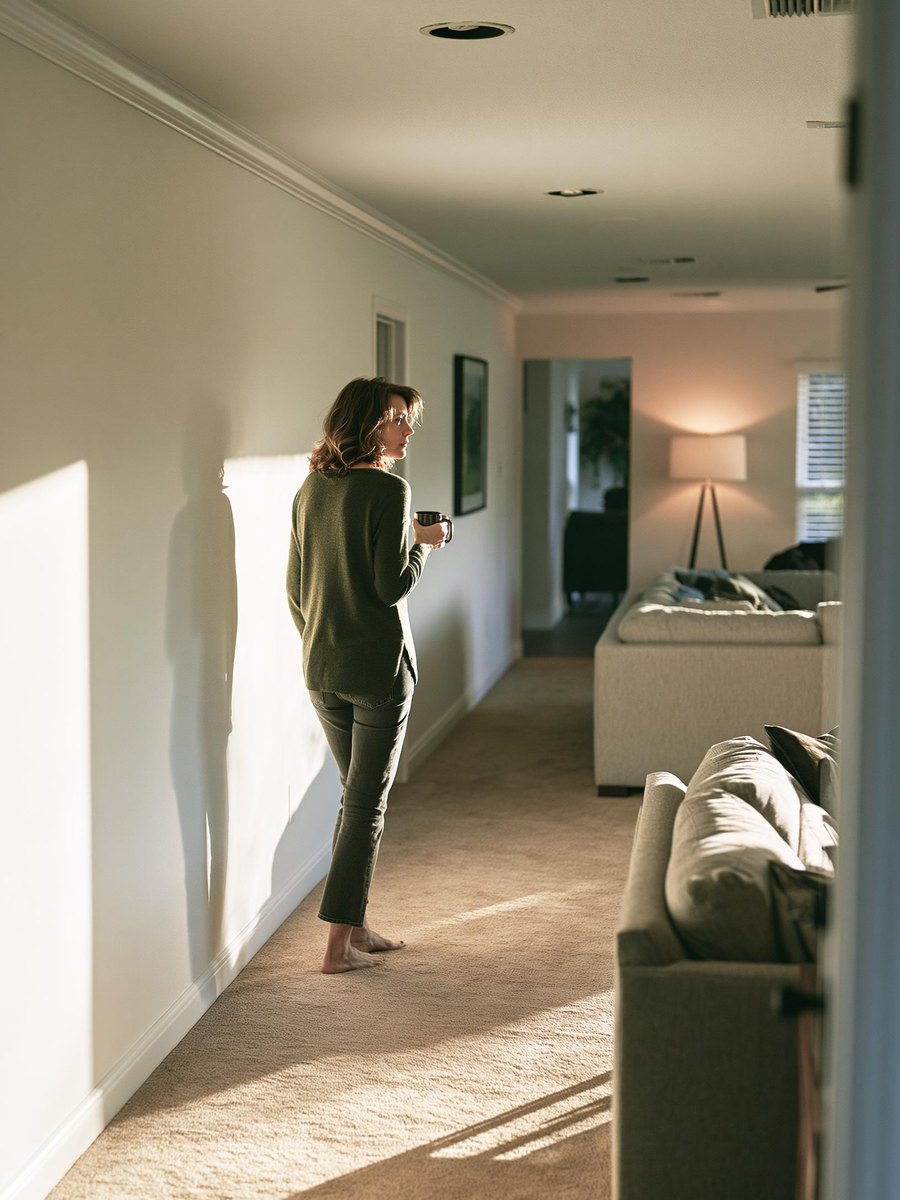
Homeowner holding a coffee mug in her own living room, standing a few steps from a long wall painted a warm off white and looking along it in late afternoon light, a sofa and a floor lamp behind her

Get Your FREE Estimate

A photo of the damage, with something beside it for scale, tells us a lot before we come out. Then we read your wall, work out what caused it, and put the price in your hand before we go. Your estimate is free. The form comes to us, or call 830-429-4502.

We'll tell you what caused your drywall crack before we repair it.

Call Us Now! 830-429-4502